When Eat Coffee needed a name for what came next, we did not invent one from scratch. We chose a word that already existed — living, familiar, and bound to coffee.
In Colombia, people say tintico for “little coffee”.
A tinto, a tintico
The root word is tinto: black coffee, no milk, often served in a small cup. In the Spanish dictionary, American usage of tinto also means a black-coffee infusion. It is not an Italian espresso, and not a latte: it is everyday coffee — at home, in the office, on the farm, and in the street.
The -ico changes everything. In Spanish, that diminutive is not only about size. It is affection. A tintico is a little coffee — and a coffee you offer. The phrase you hear everywhere: “¿Quieres un tintico?” — would you like a little coffee? It is not an order. It is an invitation.
Where the word comes from
Tinto comes from Latin tinctus: dyed, stained. The same word as for red wine — because the drink is dark, “tinted”. In Colombia the term settled in the twentieth century for filtered black coffee. Some stories place it in the farms of Antioquia, others in the “inked water” of early machines. The exact version matters less than this: the word spread across the country.
Tinto is democratic. It is served hot and simple, sometimes sweetened with panela. It does not need a barista machine to exist. It needs a gesture — and often, someone across from you.
Why this name for a tablet
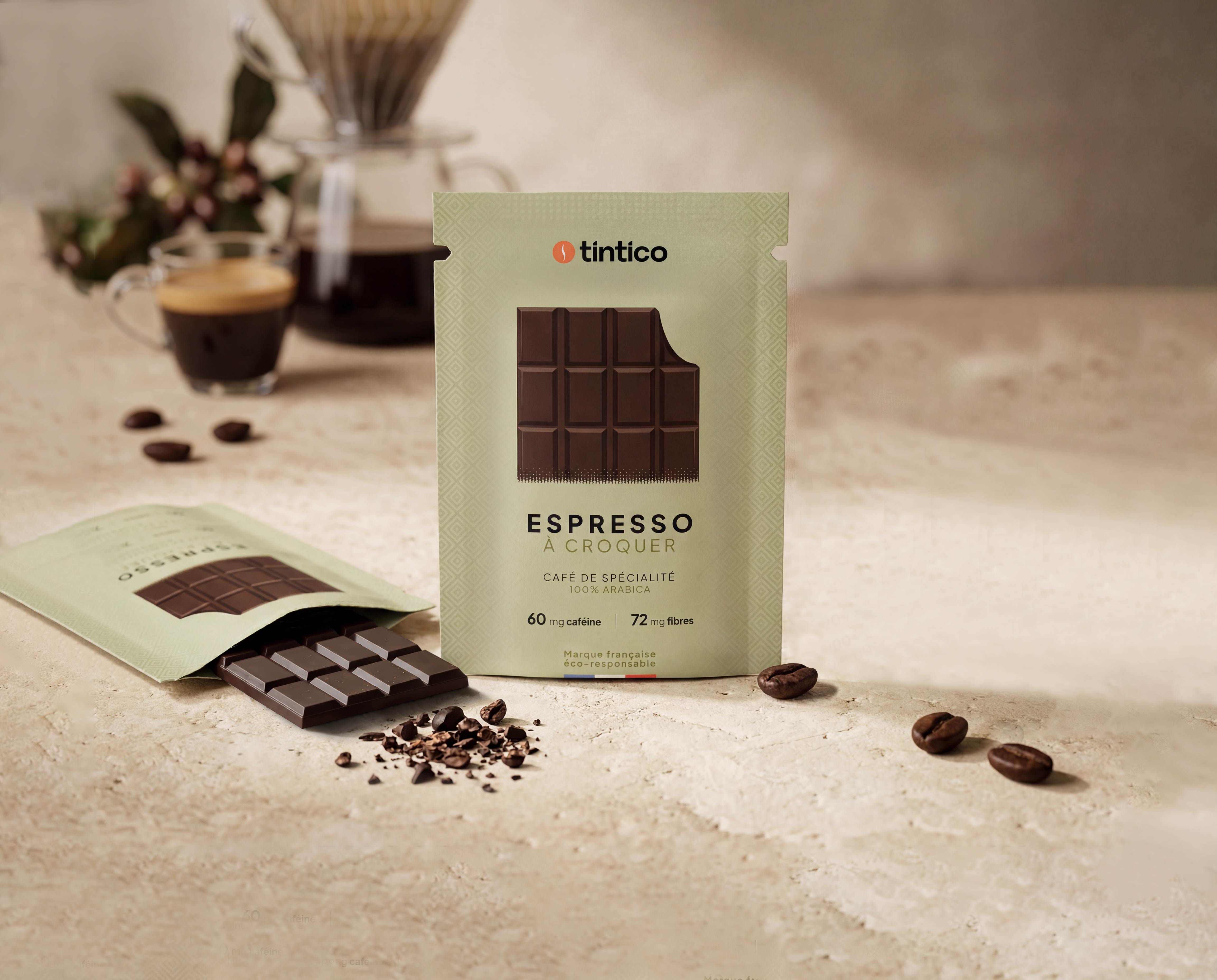
Tintico is a little coffee. An espresso tablet you can bite into is, too. No machine, no cup, no water: the coffee sits in your hand, you bite, it melts. The format is small. The ritual is whole.
We did not choose this word to empty it of meaning. We chose it because it already says what we want to offer: concentrated coffee, immediate, and a little tender. A tintico is coffee you share. Ours slips into a pocket — but the intention is the same.
Eat Coffee was the launch name, on Ulule in 2025. Tintico is the brand name: little coffee, in Colombia — and now, espresso you can bite into.